Department Of Zoology
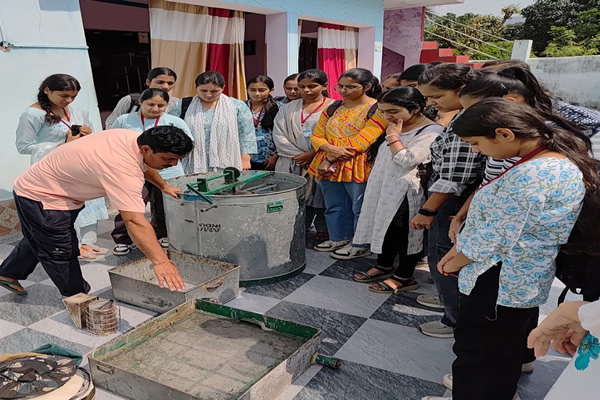
The Department of Zoology was established in 2009 with the introduction of the science stream at Government Arya Degree College, Nurpur. The department features a smart classroom with a seating capacity of 60 students and a laboratory that accommodates 30 students. This laboratory is equipped with an interactive touch-screen display board, a whiteboard and essential apparatus, including dissecting and compound microscopes, an oven and a refrigerator. Additionally, it is well-stocked with the animal specimens, models, charts, permanent slides, chemicals and glassware necessary for undergraduate practical coursework. A desktop computer with Wi-Fi connectivity is also available for student and faculty use.
Regular lectures and practical sessions are conducted throughout the academic year to complete the syllabi for first, second and third year classes. Students actively participate in both co-curricular and extracurricular activities. Academic initiatives include regular class tests, midterm examinations, remedial classes for underperforming students, seminars, oral presentations, quiz competitions and project work. To enhance student knowledge, skills and overall personality development, the department periodically organises workshops, training courses, expert lectures and educational tours. Furthermore, the college has signed Memorandums of Understanding (MoUs) with various government institutions and private organisations to facilitate collaboration, knowledge exchange and research skill development. These partnerships allow external experts to share their valuable expertise with both faculty and students.
- Faculty Profile
| Name of Post | Sanctioned | Filled |
| Assistant / Associate Professor | 02 | 01 |
| S.N. | Name of Teacher | Designation | Qualification | Specialization | Teaching Experience | Email /Mobile No. |
| 1 | Dr Diljeet Singh | Associate Professor | MSc , PhD (Zoology) | Avian Studies | 19 + Years | sin.diljeet@gmail.com 8627951997 |

Dr Diljeet Singh (Assoc. Prof.)
- Libratory Staff
| S.N. | Name of Post | Sanctioned | Filled |
| 1 | LA (Lecturer Assistant) | 01 | 01 |
| S.N. | Name of LA | Designation | Qualification | Experience (LA) |
| 1 | Sh Sham Lal | LA (Lab Attendant) | Matric (10th) | 14 Years |
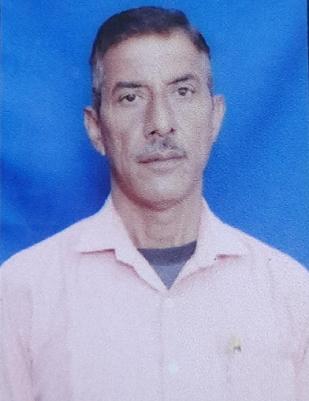
Sh Sham Lal (LA)
- Enrolment of Students
| Sr No. | Class | Session 2022-23 | Session 2023-24 | Session 2024-25 | Session 2025-26 | Session 2026-27 |
|---|---|---|---|---|---|---|
| 1. | B.Sc. 1st year / B.Sc. 1st Sem. (w.e.f 2026) | 45 | 51 | 43 | 38 | |
| 2. | B.Sc 2nd year | 36 | 32 | 21 | 17 | |
| 3. | B.Sc 3rd Year | 45 | 15 | 19 | 14 |
- Courses Offered
| 1. Semester System-NEP-2020 (2026-27 onwards) 3 Year UG Program | ||||
|---|---|---|---|---|
|
A. Multidisciplinary : Bachelor of Life Sciences OR B. Single Major : Bachelor of Life Sciences (Zoology) | ||||
| Class | Discipline Specific Course Core (DSC) | Skill Enhancement Course (SEC) | Multidisciplinary Course (MDC) | Internship/Apprenticeship/ Project/ Community Outreach I/A/P/C |
| 1st Semester |
Fundamentals of Invertebrates BZOODSC-111 4 Credits (3T+1P) |
Apiculture BZOOSEC-111 3 Credits (T) |
Economic Zoology BZOOMDC-111 3 Credits (T) | – |
| 2nd Semester |
Biology of Vertebrates BZOODSC-121 4 Credits (3T+1P) |
Sericulture BZOOSEC-121 3 Credits (T) |
Wildlife of Himachal Pradesh BZOOMDC-121 3 Credits (T) |
I/A/P/C-1 4 Credits |
| 2. Annual System (2015-16 onwards) 3 Year UG Program : Bachelor of Life Sciences with Zoology | |||
|---|---|---|---|
| Class | Core Discipline Specific Course (DSC) | Skill Enhancement Course (SEC) | Discipline Specific Elective (DSE) |
| BSc 2nd Year |
Physiology and Biochemistry DSC-1 ZOOL201 6 Credits (4TH+2PR) Genetics and Evolutionary Biology DSC-II ZOOL202 6 Credits (4TH+2PR) |
Medical Diagnostics SEC-I ZOOL203 4 Credits (TH) Apiculture SEC-II ZOOL204 4 Credits (TH) | – |
| BSc 3rd Year | – |
Sericulture SEC-III ZOOL303 4 Credits (TH) Aquarium Fish Keeping SEC-IV ZOOL304 4 Credits (TH) |
Animal Biotechnology DSE-1 ZOOL301(B) 6 Credits (4TH+2PR) Reproductive Biology DSE-II ZOOL302(C) 6 Credits (4TH+2PR) |
| Course | Outcomes |
|---|---|
| Fundamentals of Invertebrates BZOODSC-111 Theory | Understand the biodiversity, evolutionary history, general classification, and characteristics of invertebrates from Protozoa to Echinoderms. Gain knowledge about the economic importance of different invertebrate animals. |
| BZOODSC-111 Practical | Learn to identify invertebrate animals and study their characteristics using provided specimens and permanent slides. |
| Biology of Vertebrates BZOODSC-121 Theory | Understand the biodiversity, evolutionary history, general classification, and characteristics of vertebrates from fishes to mammals. Gain knowledge about the economic importance of different vertebrate animals. |
| BZOODSC-121 Practical | Learn to identify vertebrate animals and study their characteristics using provided specimens and slides. Gain knowledge of the skeletal systems of selected vertebrates. |
| Apiculture BZOOSEC-111 Theory | Understand different honey bee species, their behaviour, rearing methods, types of beehives and beekeeping equipment. Learn about the extraction of bee products, the role of bees in pollination and the dynamics of the beekeeping industry. |
| Sericulture BZOOSEC-121 Theory | Explore the history of sericulture, types of silkworms, their life cycles, and common pests and diseases. Understand the commercial importance of silkworms and the sericulture industry. |
| Economic Zoology BZOOMDC-111 Theory | Understand the methodologies and perspectives of applied branches of zoology to explore self-employment opportunities. Gain knowledge about crop pests and their impact on humans, as well as pest management techniques. Understand the concepts of beekeeping, sericulture, poultry and animal husbandry. |
| Wildlife of Himachal Pradesh BZOOMDC-121 Theory | Gain comprehensive knowledge about the wildlife of Himachal Pradesh, including flagship animals, conservation challenges and the protected area network. Explore ecotourism, human-wildlife conflict and sustainable development. |
| Course | Outcomes |
|---|---|
|
Physiology and Biochemistry ZOOL201 TH Theory | Gain knowledge about the physiology of nerves, muscles, digestion, respiration, excretion, cardiovascular system, reproductive system and endocrine system. Understand the enzymes and biochemistry of metabolism in carbohydrates, lipids and proteins. |
|
ZOOL201 PR Practical | Learn to prepare temporary and permanent slides of blood samples and identify histological slides of endocrine glands and visceral organs. Learn to perform confirmatory tests for different types of carbohydrates, study the action of salivary amylase, and estimate proteins. |
|
Genetics and Evolutionary Biology ZOOL202 TH Theory | Gain knowledge of genetics, including Mendelian and non-Mendelian inheritance, linkage, crossing over, gene mapping, mutations, chromosomal aberrations, and sex determination. Understand evolutionary biology, including the history and origin of life, evolutionary theories, evidence of evolution, natural selection, isolating mechanisms, species concepts, types of evolution and extinctions. |
|
ZOOL202 PR Practical | Learn about the laws of inheritance, the chi-square test, gene mapping, human karyotypes, fossils, homologous and analogous organs, phylogeny of horse and Darwin’s finches. |
|
Medical Diagnostics ZOOL203 TH Theory | Gain knowledge of diagnostic methods for the analysis of blood and urine, infectious and non-infectious diseases, tumours and imaging techniques. |
|
Apiculture ZOOL204 TH Theory | Gain knowledge about types of honeybees, biology, life cycles, bee rearing, pests, parasites, diseases, apiculture economics, bee products, beekeeping industry and entrepreneurship in apiculture. |
|
Animal Biotechnology ZOOL301(B) TH Theory | Gain knowledge of the scope of biotechnology (food production, primary and secondary metabolites, vaccination, waste disposal, and others) and molecular techniques in gene mapping (cloning vectors, restriction enzymes, transformation techniques, genomic/cDNA libraries, blotting techniques, PCR, DNA fingerprinting, and microarrays). Understand genetically modified organisms (transgenic animals and plants) and culture techniques (primary and secondary cultures, diagnosis of genetic diseases, recombinant DNA in medicine and gene therapy). |
|
ZOOL301(B) Practical | Learn about the isolation of genomic and plasmid DNA from E. coli, digestion of plasmid DNA, construction of restriction maps, calculation of transformation efficiency, blotting techniques (Southern, Northern, and Western), DNA sequencing, PCR, and DNA fingerprinting. |
|
Reproductive Biology ZOOL302(C) TH Theory | Gain knowledge of the reproductive systems of rats and humans. Study the reproductive endocrinology of male and female reproductive systems (gonadal axis, development of gonads, and sex determination) and functional anatomy (gametogenesis, androgens, reproductive cycles, ovulation, menstrual cycles, implantation, parturition, and lactation). Understand reproductive health, including Assisted Reproductive Techniques (IVF, IUT, ET, ZIFT, GIFT, and FROST), modern contraceptive devices and demographic terms in family planning. |
|
ZOOL302(C) PR Practical | Learn about the setup and maintenance of an animal house, animal care and surgical techniques (ovariectomy, hysterectomy, castration and vasectomy). Examine sections of male and female reproductive systems in rats and humans, vaginal smears of rats, cytology of the human vagina, sperm count and motility and modern contraceptive devices. |
|
Sericulture ZOOL303 TH Theory | Gain knowledge of silkworms, including history, status, silk routes, types of silkworms, species, and races. Learn about the rearing (early and late age) of silkworms, mulberry gardens, disinfectants, mountages, and the drying, spinning, and harvesting of cocoons. Understand silkworm pests, diseases and entrepreneurship in sericulture. |
|
Aquarium Fish Keeping ZOOL304TH Theory | Gain knowledge of aquarium fishes, including endemic and exotic types. Study the biology of fishes such as the Guppy, Molly, Swordtail, Angelfish, Blue Morph, Anemonefish and Butterflyfish. Learn about fish food, feeding habits, transport methods and aquarium maintenance. |